
This article originally appeared in the Augusta Free Press.
I feel obligated to offer the following disclaimer every time I write anything remotely political: lord knows I try to stay out of politics, because as I’ve said before, there’s seemingly no benefit to engaging in political discussions nowadays, considering such discussions, at best, end up raising everyone’s blood pressure, and at worst cause lasting ruptures between family and friends. I’d much rather be writing about more benign topics, like David Lynch’s movies or my burgeoning gambling addiction. But politics has once again barged into my living room like an abrasive gorilla, pounding its chest and spitting in my face and forcing me to acknowledge its presence. If I could banish it I would, but it’s stubborn and strong and not so easily evicted. The only way to calm the beast is to address it, so here I am, writing about politics again, mostly against my will.
I don’t mean to harp on my family’s specific situation, considering I addressed our current stresses in a previous column, but I think there’s something broadly relatable about our experience: my wife is losing her job with a non-profit because of federal funds that still haven’t been released, and now, with the House of Representatives passing a budget proposal which instructs the committee that oversees Medicaid to “come up with at least $880 billion in cuts,” our four-year-old son’s benefits could be on the chopping block. Medicaid has greatly eased our financial burden by paying for numerous medical costs throughout the years, including but not limited to an extended stay in the NICU, bone-anchored hearing aids, surgeries, and weekly physical and occupational therapies. Medicaid has been pivotal in keeping our family financially stable, and its loss, or even its diminishment, would instantly destabilize our lives. Perhaps it’s hard for people who don’t have Medicaid to understand its cruciality for so many American families. I shudder to think about the thousands of dollars in medical bills we would’ve been on the hook for without it.
Medicaid has been pivotal in keeping our family financially stable, and its loss, or even its diminishment, would instantly destabilize our lives.
Those who support the idea of scaling back Medicaid often argue that children with chronic conditions, like my son, need not worry about losing coverage. But who can make this claim with any degree of certainty? Trump has said Medicaid won’t be touched, yet he also backed the aforementioned spending bill which portends a potentially significant deterioration of the program. With no clear answers, and Republicans on a vague mission to “cut waste, fraud and abuse of taxpayer dollars,” as Rep. Hal Rogers (Kentucky) put it, what are people in our situation supposed to believe? Even if my son’s benefits remain secure, many families in the Shenandoah Valley and beyond, some of whom are in more dire financial circumstances than our own, likely won’t be so lucky.

Uncertainty about Medicaid is just one of the many issues Americans are rightfully anxious about right now. There’s also the funding freeze (yes, it’s still ongoing) and DOGE’s brusque hacking of the federal workforce, both of which have resulted in four people in my immediate orbit alone (not counting my wife) either losing their jobs or having their work adversely affected. Never have I witnessed an incoming administration have such an acute and disruptive effect on the lives of people I know personally. During less-tumultuous times, the day-to-day actions of the big wigs in Washington often seem as distant from us, for better or worse, as the capital in one of Kafka’s short stories. (“Great rulers have superseded each other…yet none of this had any influence on our little town.”). This year, though, it’s as if the federal government has ordered an army of chest-thumping gorillas to barge into living rooms across the country, their presence being so widespread that even if you don’t personally have one squatting in your house, you likely know someone who does. The gorillas are just that ubiquitous.
The main response I’ve heard in favor of the current administration’s slash-and-burn approach is something along the lines of “well, at least they’re doing something.” But something isn’t inherently better than nothing, and oftentimes something can be so much worse than nothing (this Lou Reed/Metallica collaboration being a prime example), especially when the consequences of that something aren’t fully considered or perhaps even cared about, thus leading to widespread tumult and confusion. Indeed, the something enacted by the current administration has caused many Americans to feel like they’re standing on terra infirma, as a recent article in Time Magazine put it, in the sense that “the ground beneath our feet is perpetually shifting, and it’s hard to keep our balance.” The world is forever changing, of course, but there are certain moments in history when change feels more accelerated and tectonic. It’s safe to say we’re currently living through one of these moments, or perhaps have been living through one of these moments, on and off, for the better part of a decade, with some of the strongest seismic activity occurring over the past month. A guy my wife knows, whose job has been hamstrung by the funding freeze, said he feels like a maimed mouse being toyed with by a hungry cat. I think many people can relate to that sentiment, both here in the valley and all across the country.
This widespread frustration came to a head last week, locally-speaking, when hundreds of people gathered outside of Rep. Ben Cline’s office in Roanoke and demanded that he hold a town hall. They were, quite reasonably, requesting a public forum where constituents could voice their concerns to a man who speaks for them in Congress. The argument against town halls, if I had to posit one, is that they sometimes devolve into an aimless airing of petty grievances that accomplishes little (ala Parks and Recreation). Yet the struggles Cline’s constituents are currently facing are far from petty (see: abrupt job losses, funding freezes and potential loss of medical coverage), and to be clear, town halls sometimes can influence congressmen to reconsider previously held positions.
The world is forever changing, of course, but there are certain moments in history when change feels more accelerated and tectonic. It’s safe to say we’re currently living through one of these moments, or perhaps have been living through one of these moments, on and off, for the better part of a decade, with some of the strongest seismic activity occurring over the past month.
Take Rich McCormick, for instance, a representative from Georgia’s sixth district, just north of Atlanta. McCormick, a Republican, went into a recent town hall ready to defend the actions of DOGE, and defend them he did…in the moment, at least, trapped as he was in a hostile environment. McCormick mostly stuck to his guns, claiming at one point that many of the jobs that were cut did “work…that was duplicitous with A.I.,” which spurred boos from the crowd. You wouldn’t have thought from listening to audio of that town hall that McCormick had changed his mind about anything, but in an interview a day later, he admitted that his constituents had made some good points, and that perhaps the current administration had, in fact, acted recklessly by bringing a chainsaw to the operating table.
“I don’t have enough studies to actually know [the implications of the abrupt DOGE cuts], and I’m not sure the president has enough information to move this quickly,” he said. “Most of us don’t have the insight or the information to really know how much of an impact this is going to have.”
All of that to say this: Ben Cline should follow in McCormick’s footsteps and hold a town hall. I’m not the first person to say this and I won’t be the last, but the more squeaky wheels, the better. There are so many people in his district, both liberal and conservative, from farmers to non-profit workers to federal employees to people who depend on Medicaid, that are being adversely affected or have the potential to be adversely affected by actions taken at the federal level. The least Cline could do is stand in the same room as them and listen to what they have to say. He’d gain a lot of respect by simply showing up, even if it might feel like he’s walking into a lion’s den. (And no, sending his staff as a surrogate doesn’t count).

Of course, there’s no guarantee a town hall would change much of anything. Cline, after all, is just one representative in a house of 435 of them, and many (but not all) Republicans seem eager to kowtow to the current administration’s desires, no matter the negative implications for working-class Americans. But the national ramifications of a town hall feel less important than the existence of that town hall in the first place: people mostly just want their concerns to be heard by a man with the power to take those concerns to the national stage, and potentially enact change. Taking the time to listen, and to truly keep an open mind, is the most meaningful and democratic thing Cline could do during this moment of terra infirma, when so many people from Roanoke to Winchester are feeling the ground shift beneath their feet, when so many people merely want their struggles validated, for Cline to admit that, yes, there is a gorilla in your living room, and yes, you do have a right to be upset about it.
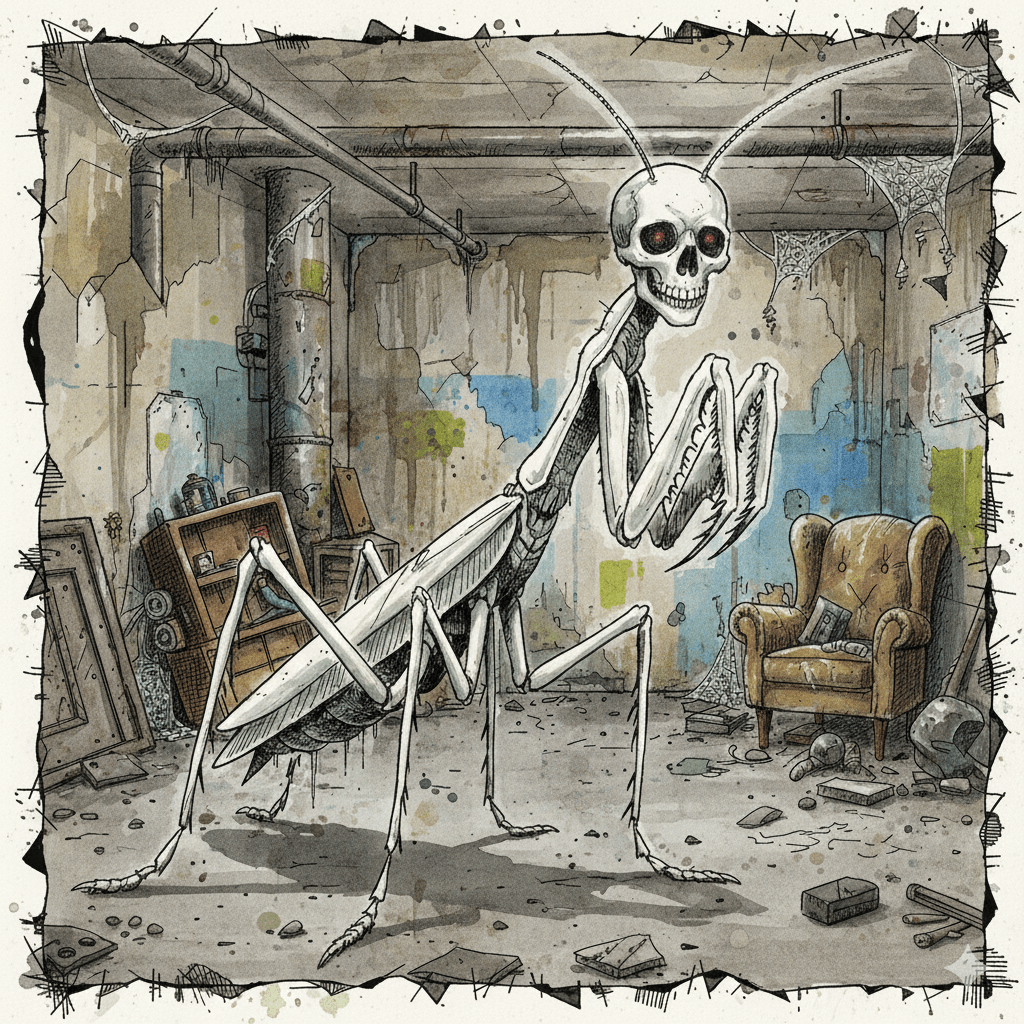
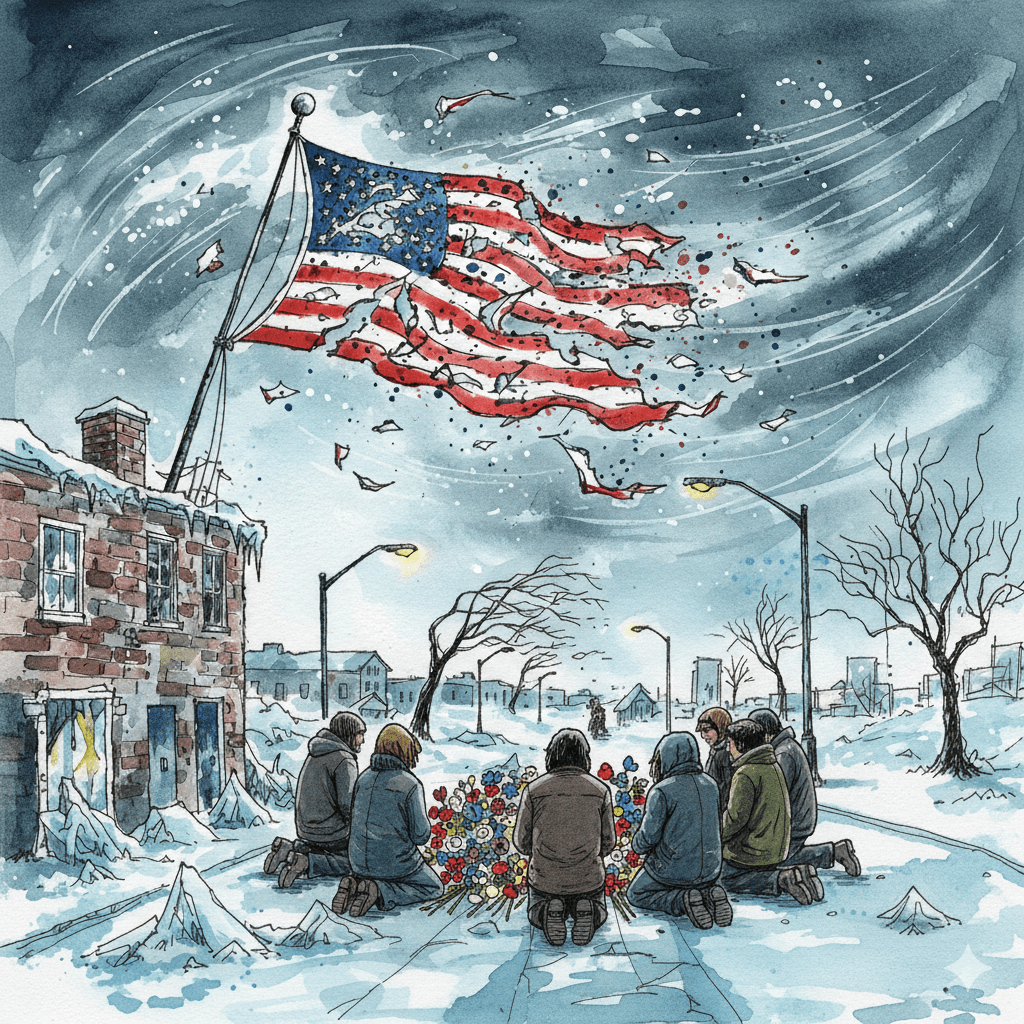
All images created using Google Gemini.
Further Reading


 Ourland
Leave a comment